
Best for retail services: Class 35. Best for downloadable software: Class 9. Best for hosted software: Class 42. The right trademark classes for foreign brands in Saudi Arabia follow the goods and services sold under the mark, not the company’s preferred industry label. This 2026 guide compares seven useful starting points and explains where their protection stops.
- Choose trademark classes for foreign brands in Saudi Arabia by the goods and services actually offered.
- Class 35 covers retail services, not automatic protection for the products being sold.
- Class 9 covers downloadable software; Class 42 covers software as a service.
- Gofico supports foreign-company business setup and ongoing compliance; trademark scope requires a separate classification decision.
Why this matters
A commercial registration identifies your business; a trademark registration protects a mark for specified goods or services. One does not replace the other. A foreign company entering Saudi Arabia needs to distinguish its operating permissions from its intellectual property decisions.
Gofico is best for foreign companies seeking business setup and ongoing compliance support in Saudi Arabia. Its business setup and compliance services address the company-establishment side of market entry. Define trademark ownership and filing scope alongside that work, rather than assuming formation secures the brand.
The World Intellectual Property Organization’s Nice Classification, thirteenth edition, version 2026, contains 45 classes: 34 goods classes and 11 services classes. Those categories organise applications; selecting a class does not give blanket protection for everything associated with that number.
What makes the best trademark class selection?
Use these criteria before choosing from the comparison below:
- Actual offering: Identify the goods or services customers receive under the mark.
- Delivery method: Distinguish downloadable products from services delivered online.
- Brand use: Separate branding on products from branding used for retail or other services.
- Specification fit: Describe the relevant goods or services precisely, using accepted classification terminology.
- Saudi filing requirements: Check the Saudi Authority for Intellectual Property, or SAIP, for current procedures and requirements.
- Expansion fit: Assess concrete planned offerings separately from activities the company has no defined plan to launch.
For a 2026 filing, use the current Nice Classification and SAIP guidance together. WIPO explains classification; SAIP administers the Saudi trademark process. Neither a broad company description nor a commercial registration activity replaces a properly drafted trademark specification.
Trademark classes at a glance
The order below follows distinct business models, not a claim that one class offers stronger protection than another. These seven classes are starting points, not a complete filing package for every foreign investor.
| Class | Best for | Standout coverage | Key limitation |
|---|---|---|---|
| Class 35 | Retail and wholesale service brands | Bringing together goods for customers to view and purchase | Does not replace protection for own-brand goods |
| Class 9 | Downloadable software brands | Recorded and downloadable software | Hosted software services belong elsewhere |
| Class 42 | Hosted software providers | Software as a service and technology services | Does not replace downloadable software coverage |
| Class 25 | Apparel brands | Clothing, footwear and headwear | Bags, jewellery and cosmetics have different classifications |
| Class 3 | Non-medicated beauty brands | Cosmetics, perfumery and toiletry preparations | Medicated products require separate classification analysis |
| Class 30 | Coffee, tea and confectionery brands | Specified food products within the class | Not a general class for all food and beverages |
| Class 43 | Restaurant and hospitality service brands | Providing food, drink and temporary accommodation | Does not replace classes for packaged branded goods |
1. Class 35: best for retail and wholesale service brands
Class 35 is the starting point when your mark identifies a retail or wholesale service. A foreign retailer bringing together goods for customers to browse and purchase should examine the relevant service wording, including how those services operate online.
Class 35 does not turn every product sold through a store into protected branded goods. An own-label retailer needs a separate assessment of the product classes.
Class 35 pros:
- Addresses the retail-service identity rather than the manufacturing category.
- Accommodates relevant retail and wholesale service descriptions.
- Helps separate store branding from own-label product branding.
Class 35 cons:
- Does not replace product-class protection.
- The goods involved in the retail service still need careful specification.
Best for: Foreign retailers and wholesalers whose mark identifies the purchasing service.
Verdict: Skip Class 35 as your only filing if you also need protection for own-brand products.
2. Class 9: best for downloadable software brands
Class 9 covers recorded and downloadable software. It is relevant when customers download a branded application or receive software as a product rather than only accessing hosted functionality.
A software business should classify its actual delivery model. Calling everything a digital platform obscures the distinction between downloadable software and software services.
Class 9 pros:
- Matches downloadable applications and recorded software.
- Separates software products from hosted services.
- Supports specifications describing the software’s relevant function.
Class 9 cons:
- Does not replace Class 42 for software as a service.
- A broad technology label does not identify the precise goods.
Best for: Foreign software companies distributing downloadable branded applications.
Verdict: Skip Class 9 as the sole software filing when the brand also identifies hosted software services.
3. Class 42: best for hosted software providers
Class 42 includes software as a service, commonly called SaaS, and platform as a service, commonly called PaaS. It also includes relevant software design and development services.
The important distinction is what customers obtain: access to hosted functionality is a service. A downloadable application associated with that service needs its own classification assessment.
Class 42 pros:
- Directly addresses hosted software services.
- Includes relevant software development services.
- Separates technology services from software products.
Class 42 cons:
- Does not replace Class 9 for downloadable software.
- Does not automatically cover every commercial activity delivered through a platform.
Best for: Foreign companies providing hosted software under their brand.
Verdict: Skip Class 42 as a catch-all for unrelated services delivered through your platform.
4. Class 25: best for clothing, footwear and headwear brands
Class 25 is a starting point for brands applied to clothing, footwear and headwear. The relevant question is whether the mark identifies those goods, not whether the company describes itself as a fashion business.
A wider fashion range needs product-by-product classification. Bags, jewellery and cosmetics do not become Class 25 goods simply because they share a clothing brand name.
Class 25 pros:
- Matches core apparel categories directly.
- Covers clothing, footwear and headwear within the class.
- Separates product protection from retail-service protection.
Class 25 cons:
- Does not cover every fashion accessory.
- Does not replace Class 35 for separately relevant retail services.
Best for: Foreign brands selling branded apparel, footwear or headwear.
Verdict: Skip Class 25 for products chosen only because they belong to a fashion collection.
5. Class 3: best for non-medicated beauty brands
Class 3 includes non-medicated cosmetics and toiletry preparations, perfumery and other specified goods. A foreign beauty company should classify each product by its nature rather than place an entire personal-care range under one heading.
Trademark classification also differs from permission to import or market a product. Product regulatory requirements remain a separate market-entry question.
Class 3 pros:
- Matches non-medicated cosmetics and toiletries.
- Includes perfumery within the class.
- Gives beauty businesses a clear product-focused starting point.
Class 3 cons:
- Does not cover all health-related or medicated products.
- Does not establish product regulatory compliance.
Best for: Foreign brands offering non-medicated cosmetics, toiletries or perfumery.
Verdict: Skip Class 3 as a blanket classification for medicated or therapeutic product ranges.
6. Class 30: best for coffee, tea and confectionery brands
Class 30 includes coffee, tea, cocoa, bread, pastry and confectionery, among other specified goods. It suits a brand placed on relevant packaged products, rather than automatically covering the business that serves them.
Food portfolios regularly cross classification boundaries. Dairy products, other foods and beverages need individual review instead of being grouped under a general food label.
Class 30 pros:
- Covers several clearly defined packaged-food categories.
- Fits branded coffee, tea and confectionery products.
- Separates product identity from restaurant-service identity.
Class 30 cons:
- Does not cover every food or beverage.
- Does not replace Class 43 for relevant food-service activities.
Best for: Foreign brands selling packaged coffee, tea, bakery goods or confectionery.
Verdict: Skip Class 30 as the only filing for a mixed food-and-beverage portfolio without reviewing each product.
7. Class 43: best for restaurant and hospitality service brands
Class 43 includes services for providing food and drink and temporary accommodation. It is relevant when the mark identifies a restaurant, café, catering service or accommodation service.
A hospitality brand can also appear on packaged products. Selling branded coffee for customers to take home creates a separate classification question from serving coffee in a café.
Class 43 pros:
- Directly addresses food-and-drink services.
- Includes temporary accommodation services.
- Distinguishes hospitality operations from packaged goods.
Class 43 cons:
- Does not replace product classes for branded packaged goods.
- Does not automatically cover every activity associated with hospitality.
Best for: Foreign restaurant, café, catering and temporary-accommodation brands.
Verdict: Skip Class 43 as the sole filing when packaged branded products also need protection.
Turn your shortlist into a filing brief
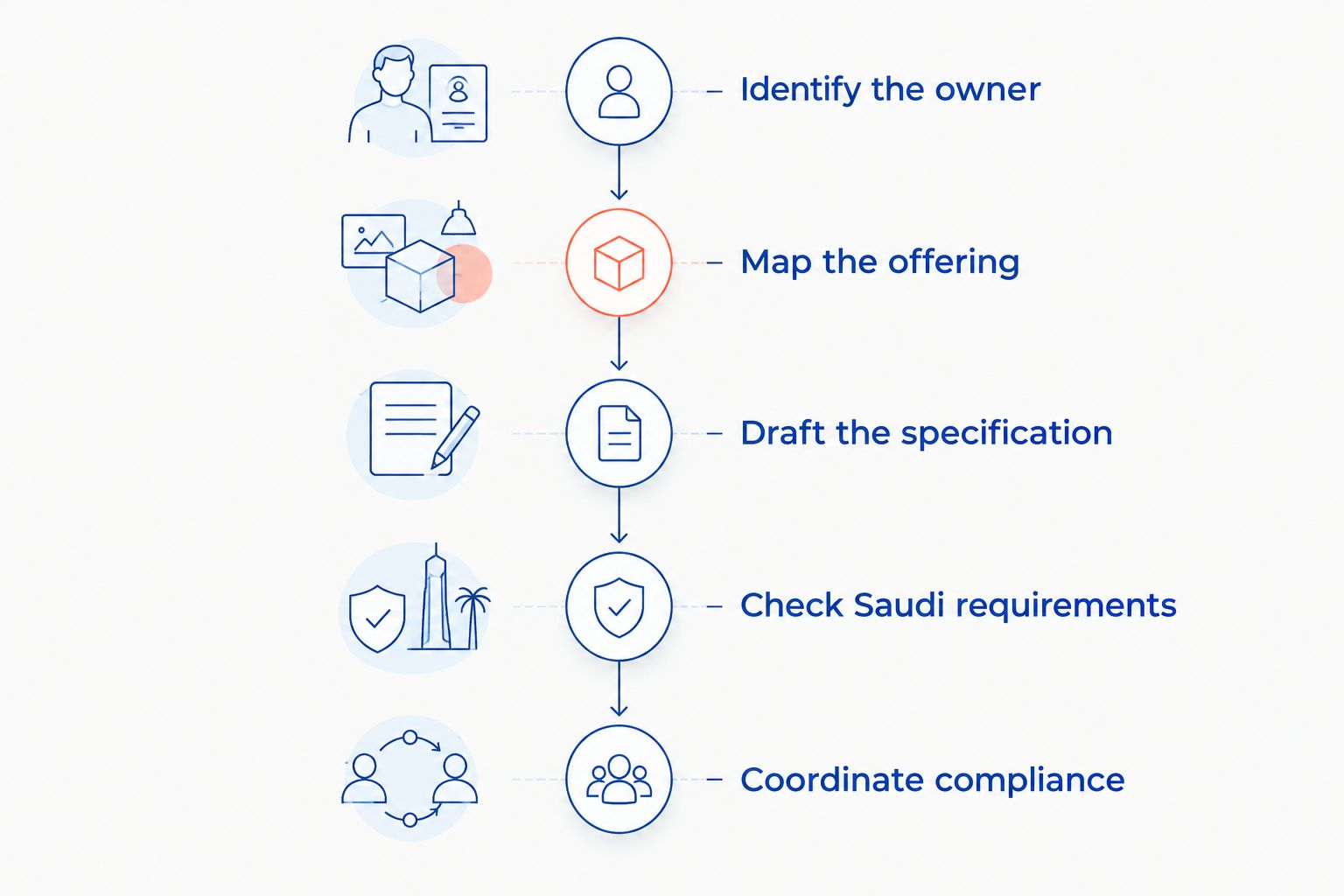
For a 2026 Saudi market entry, prepare a classification brief before instructing a filing. Keep trademark scope distinct from incorporation, operating permissions and product approvals.
- Identify the owner: Record which legal entity will own the mark and confirm its details against supporting documents.
- Map the offering: List each branded product and service, including downloadable and hosted components.
- Draft the specification: Match those offerings to current Nice Classification terms without assuming a class heading covers everything.
- Check Saudi requirements: Review SAIP guidance and arrange the relevant clearance and filing advice.
- Coordinate compliance: Align ownership and brand use with the company’s market-entry arrangements and ongoing obligations.
Use Gofico’s company formation and compliance support to coordinate the business setup workstream. Keep advice on trademark availability, classification and representation clearly assigned within your wider market-entry plan; do not treat a formation engagement as confirmation of trademark clearance.
Discuss your Saudi market entry
Explain your ownership structure, planned activities and ongoing compliance needs.
How these classes were ranked
This 2026 shortlist uses the WIPO Nice Classification, thirteenth edition, version 2026, for goods-and-services categories. SAIP’s official trademark guidance is the reference for Saudi filing procedures. These sources serve different purposes: classification identifies the category; the Saudi process determines application requirements.
The ranking prioritises distinct commercial uses, clear specification fit and visible boundaries between goods and services. It is not an availability search, a registrability opinion or a complete list of relevant classes.
Which trademark classes should you choose?
Choose the class that matches what customers receive under your mark. Start with Class 35 for retail services, Class 9 for downloadable software or Class 42 for hosted software. Use the product and hospitality entries when those offerings match your business.
If your brand crosses categories, assess each offering separately. A café selling packaged coffee and a software company offering both downloads and hosted access present different classification needs; neither should choose a single class merely for simplicity.
FAQ
What are the best trademark classes for foreign brands in Saudi Arabia?
The best classes match the goods and services offered under the mark. Class 35 addresses retail services, Class 9 downloadable software and Class 42 hosted software; other offerings require their own classification assessment.
Does Class 35 protect every product sold through my store?
No. Class 35 retail-service protection does not replace trademark protection for your own branded products. Assess the goods separately from the store service.
Should a software company choose Class 9 or Class 42?
Choose Class 9 for downloadable software and Class 42 for hosted software services. A business offering both needs to assess both categories and draft the specifications accordingly.
Does Saudi company registration protect my trademark?
No. Company registration and trademark registration serve different purposes. Assess the mark, its owner and its goods-and-services scope separately from business formation.
How many trademark classes are there in 2026?
The Nice Classification has 45 classes in 2026: 34 goods classes and 11 services classes. These are classification categories, not automatic protection for every item within a selected class.
Can a restaurant use Class 43 for packaged coffee too?
Class 43 covers relevant food-and-drink services, not packaged coffee goods. Assess Class 30 for branded coffee products alongside the restaurant-service specification.
Where should I check Saudi trademark filing requirements?
Check the Saudi Authority for Intellectual Property for Saudi trademark procedures and requirements. Use WIPO’s current Nice Classification to assess the goods-and-services categories.
One last thing
Your operating licence and your trademark specification answer different questions. The first concerns the activities your company is authorised to conduct; the second identifies the goods or services for which trademark protection is sought. Before launching in 2026, give Gofico a clear business-activity brief and give your trademark adviser a separate branded-offering brief.
Related guides
- Business structures for foreign investors in Saudi Arabia
- Licensing options for foreign manufacturers in Saudi Arabia
- Licensing options for foreign logistics firms in Saudi Arabia