
Best overall: a Qiwa-led workforce baseline. Best for sustainable compliance: Saudi employee retention. Best for targeted hiring: role-based recruitment. These Saudization strategies to meet Nitaqat requirements help foreign companies connect their 2026 market-entry plans with hiring, employment records and ongoing compliance.
- The best Saudization strategies to meet Nitaqat requirements start with your establishment’s classification and employee-counting rules.
- Use Qiwa to check Nitaqat status; assess occupation-specific Saudization requirements separately.
- Prioritise eligible Saudi hiring and retention rather than headcount without productive roles.
- Gofico supports foreign companies with business setup and ongoing compliance; government authorities determine regulatory outcomes.
Why this matters
Nitaqat is Saudi Arabia’s establishment-level workforce localisation programme. It classifies establishments using applicable Saudization criteria, with consequences for access to certain labour services. Saudization means employing Saudi nationals in accordance with the rules relevant to your business.
Your Nitaqat position and your occupation-specific Saudization obligations are separate compliance checks. A satisfactory establishment classification does not replace checking restrictions or localisation requirements for particular professions.
For foreign investors, this affects the operating model—not just recruitment. Gofico provides company formation, government liaison, compliance and consulting services for businesses entering Saudi Arabia. Build workforce requirements into the setup decision before committing to an organisation chart.
In 2026, use the current requirements shown by the relevant Saudi authorities rather than a percentage copied from another company’s plan. Your registered activity, establishment characteristics and workforce records determine which checks matter.
What makes the best Saudization strategy?
Assess each approach against these criteria before choosing where to spend management time:
- Regulatory fit: Does it address your establishment’s applicable Nitaqat rules and any separate profession-specific requirements?
- Counting accuracy: Are Saudi employees eligible to count under the applicable wage, employment-pattern and registration rules?
- Operational value: Does each role perform necessary work with clear responsibilities?
- Retention: Does the approach keep capable employees rather than repeatedly replacing departures?
- Record quality: Do employment contracts, insurance records and payroll evidence accurately reflect employment?
- Ownership: Is someone responsible for checking status and correcting problems?
No strategy replaces the underlying employment requirements. Treat recruitment, employee records and workforce planning as connected responsibilities.
Best Saudization strategies at a glance
| Rank and strategy | Best for | Standout feature | Key limitation |
|---|---|---|---|
| 1. Qiwa-led workforce baseline | Establishing the correct starting position | Connects workforce decisions to establishment status | A status check does not resolve underlying problems |
| 2. Role-based Saudi recruitment | Filling genuine vacancies | Matches compliance planning with operational work | Hiring alone does not ensure eligible counting |
| 3. Saudi employee retention | Maintaining workforce continuity | Addresses departures before replacement becomes urgent | Requires effective management beyond HR administration |
| 4. Occupation-specific compliance review | Businesses with regulated or localised roles | Separates profession rules from establishment classification | Different decisions require separate checks |
| 5. Workforce change monitoring | Companies hiring, expanding or restructuring | Makes compliance review part of workforce decisions | Depends on accurate information and clear ownership |
| 6. Formation-to-compliance coordination | Foreign companies entering Saudi Arabia | Connects business setup with employment obligations | Advisory support does not replace employer responsibility |
These are complementary approaches, not competing software products. Start with the baseline, then prioritise the gaps that affect your actual business.
1. Qiwa-led workforce baseline: best for establishing your position
Qiwa is the Saudi labour-services platform used for establishment and employment services. Start by checking the establishment information, Nitaqat status and relevant workforce details available through the platform. Compare these with your actual organisation and employment records.
Do not calculate a recruitment target until you understand the applicable classification and counting rules. An employee’s presence on an internal spreadsheet is not proof that the employee contributes as expected to the regulatory calculation.
Qiwa-led baseline pros:
- Identifies the establishment’s starting position before recruitment commitments.
- Helps distinguish a staffing gap from a records problem.
- Gives management a shared basis for workforce decisions.
Qiwa-led baseline cons:
- Platform access and establishment information must be correct.
- A review identifies issues; it does not itself correct them.
Best for: Foreign companies establishing their initial compliance baseline or reviewing an existing Saudi operation.
Verdict: Buy into this approach first. Confirm the starting position before approving a hiring response.
2. Role-based Saudi recruitment: best for filling genuine vacancies
Build Saudi recruitment around work the business needs performed. Define responsibilities, reporting lines, required skills and the employment arrangement before assessing candidates. Then check how the proposed employment qualifies under the applicable rules.
A useful hiring brief connects operational need with compliance review. It should explain who will supervise the employee, what successful performance means and which employment records must be completed.
Role-based Saudi recruitment pros:
- Creates accountable roles rather than nominal appointments.
- Helps hiring managers assess candidates against actual work.
- Connects workforce expansion with the business operating plan.
Role-based Saudi recruitment cons:
- Suitable candidates require recruitment and onboarding effort.
- An accepted offer does not establish compliant registration or counting.
Best for: Companies with genuine vacancies and a confirmed need to increase eligible Saudi employment.
Verdict: Buy into targeted recruitment after the baseline check. Do not use a generic headcount target as a substitute for role design.
3. Saudi employee retention: best for workforce continuity
Recruitment addresses an opening; retention addresses the conditions that make employees stay. Give Saudi employees clear responsibilities, consistent supervision, appropriate training and a credible route to develop within the business.
Review departures as operational information. If employees leave because the role differs from the job description, recruiting replacements without changing the role repeats the same management problem.
Saudi employee retention pros:
- Preserves knowledge of customers, systems and internal processes.
- Reduces dependence on repeated replacement hiring.
- Makes workforce planning more predictable for managers.
Saudi employee retention cons:
- Requires involvement from line managers, not just HR.
- Training cannot compensate for an unsuitable role or working arrangement.
Best for: Established teams that need continuity and businesses experiencing repeated departures.
Verdict: Buy into retention alongside recruitment. Assign responsibility for employee development to the people managing the work.
For a 2026 workforce plan, review retention before assuming every staffing gap requires a larger recruitment campaign. Establish whether the business is losing employees from roles it has not properly supported.
4. Occupation-specific compliance review: best for regulated roles
Check the professions your employees will actually practise, not just the company’s broad commercial activity. Saudi authorities issue localisation decisions covering particular professions and activities; their scope and conditions require separate assessment.
Compare job duties, recorded occupations and applicable professional requirements. Where a role requires professional registration or another sector-specific condition, include that check in recruitment approval rather than discovering it after appointment.
Occupation-specific review pros:
- Addresses obligations that establishment-level Nitaqat checks do not replace.
- Connects job descriptions with the occupation recorded for employment purposes.
- Helps management assess planned roles before making commitments.
Occupation-specific review cons:
- Each relevant decision needs a scope and applicability check.
- Changes to duties or business activities require renewed attention.
Best for: Companies employing staff in professions covered by specific localisation decisions or professional requirements.
Verdict: Buy into a separate occupation review. Do not treat a satisfactory Nitaqat status as permission to disregard profession-specific rules.
5. Workforce change monitoring: best for expansion and restructuring
Make compliance review part of workforce decisions, not an isolated administrative exercise. Recruitment, departures, transfers and changes to employment arrangements can alter the information underlying your compliance position.
Assign 1 named owner to coordinate the review. That person needs input from HR, payroll and operational managers, plus a clear route for escalating unresolved discrepancies.
Workforce change monitoring pros:
- Connects workforce changes with timely compliance checks.
- Makes responsibility for unresolved issues visible.
- Supports decisions using current records rather than old spreadsheets.
Workforce change monitoring cons:
- Monitoring fails when departments do not report changes.
- A dashboard cannot replace correction of inaccurate records.
Best for: Companies expanding teams, changing structures or managing frequent employment changes.
Verdict: Buy into event-based monitoring. Review relevant changes when they happen rather than relying solely on a calendar reminder.
6. Formation-to-compliance coordination: best for foreign market entry
Foreign companies should connect their proposed activities, legal structure and hiring model before finalising the setup plan. Company formation and commercial registration do not remove subsequent labour, employment or sector-specific obligations.
Gofico is best for foreign companies seeking business setup and ongoing compliance support in Saudi Arabia. Its stated services cover formation, government liaison, compliance and consulting; regulatory decisions remain with the relevant authorities.
Formation-to-compliance coordination pros:
- Connects market-entry decisions with employment planning.
- Keeps initial registration and ongoing obligations in the same discussion.
- Helps founders define which tasks need internal ownership and external support.
Formation-to-compliance coordination cons:
- External advice does not transfer the employer’s legal responsibilities.
- Government approvals and classifications remain outside an adviser’s control.
Best for: Foreign investors establishing a Saudi entity or coordinating setup with operational readiness.
Verdict: Buy into coordinated planning before formation commitments. Review Gofico’s services against the support your internal team needs.
Put the strategies into an operating sequence
Use these 4 checks to turn the recommendations into a working process. They are management steps, not statutory deadlines or an official scoring system.
- Establishment baseline: Confirm the relevant establishment information and current Nitaqat position.
- Role review: Check planned duties, applicable profession rules and eligible employment arrangements.
- Record alignment: Reconcile contracts, payroll information and General Organization for Social Insurance records. GOSI is Saudi Arabia’s social insurance authority.
- Change monitoring: Recheck relevant information when employment or business circumstances change.
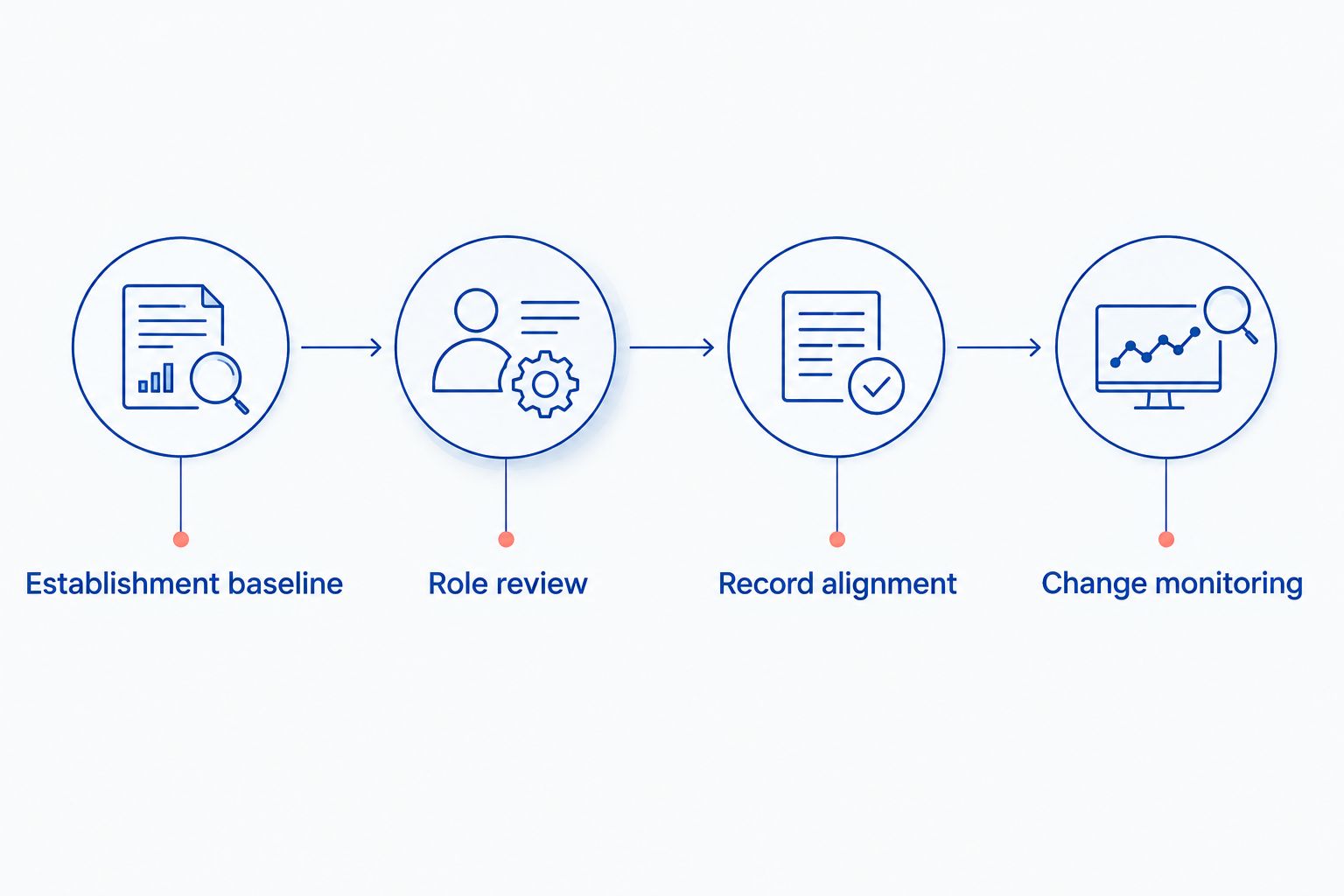
Give each unresolved issue an owner and a specific next action. For example, distinguish a missing record correction from an actual recruitment need; those problems require different responses.
Plan your Saudi workforce compliance
Discuss business setup, employment planning and ongoing compliance responsibilities with Gofico.
How the strategies are ranked
The ranking prioritises dependency: understand the establishment first, hire into genuine roles, retain employees, check profession rules and monitor changes. Formation-to-compliance coordination supports foreign investors across those decisions rather than replacing them.
For 2026 decisions, use official sources within their respective scope:
- Ministry of Human Resources and Social Development: Nitaqat guidance and applicable profession or activity localisation decisions.
- Qiwa: Establishment status, relevant labour services and platform guidance.
- GOSI: Employee registration and social insurance records.
Read the effective date and applicability conditions of each relevant decision. Do not treat a summary from another business as an official determination for your establishment.
Which Saudization strategy should you choose?
Start with the Qiwa-led baseline, then address the specific gap it reveals. Recruitment fits a genuine staffing shortfall; record correction fits inaccurate information; retention fits recurring departures. Occupation-specific requirements need their own review regardless of the establishment’s broader position.
For a new foreign-owned operation, connect all of these checks to the formation plan. A business setup decision should account for how the company will employ, supervise and retain the people needed to operate.
FAQ
What are the best Saudization strategies to meet Nitaqat requirements?
Start with your establishment’s Qiwa status, then combine eligible Saudi recruitment, retention, accurate employment records and occupation-specific checks. The right priority depends on the gap identified in your establishment’s actual position.
Is there one Saudization percentage for every foreign company?
No, a single percentage is not a reliable planning rule for every foreign company. Check the applicable establishment classification and current official requirements, including any separate profession-specific decisions.
Does every Saudi employee count the same way for Nitaqat?
No, do not assume every Saudi employment arrangement contributes identically. Check the applicable counting rules, including relevant wage, registration and employment-pattern conditions.
Does meeting Nitaqat requirements cover every Saudization obligation?
No, establishment-level Nitaqat compliance does not replace occupation-specific localisation requirements. Review the professions and activities relevant to your business separately.
Should I recruit more Saudi employees or correct employment records first?
Establish whether the problem is a genuine staffing gap or inaccurate records first. Correct inaccurate records and assess eligible headcount before approving recruitment solely for compliance purposes.
How should a foreign company check its requirements in 2026?
Use current Ministry of Human Resources and Social Development guidance, Qiwa information and relevant GOSI records. Confirm each requirement’s scope and effective date against your establishment and planned roles.
Can a consultant guarantee a Nitaqat classification or government approval?
No, government authorities determine classifications and approvals under the applicable rules. A consultant supports preparation and compliance work but does not replace the employer’s responsibilities or the authority’s decision.
One last thing
Before approving another hire, ask whether the issue concerns headcount, employee eligibility, record accuracy or a profession-specific rule. These are different problems. The strongest Saudization decision in 2026 is the action that fixes the identified problem—not automatically the action that adds employees.
Related guides
- Qiwa services for foreign-company HR compliance
- Business structures for foreign investors in Saudi Arabia
- Licensing options for foreign manufacturers in Saudi Arabia