
Best overall: a Saudi-riyal corporate current account. Best for foreign-currency payments: a corporate foreign-currency account. Best for surplus cash: a corporate term deposit. The best bank account types for foreign companies in Saudi Arabia depend on your registered entity, payment flows and access requirements—not simply the bank’s name.
- Start with a Saudi-riyal corporate current account for domestic business payments.
- Compare bank account types for foreign companies in Saudi Arabia by entity eligibility, currency and payment controls.
- Add foreign-currency accounts for matching receipts and payments; reserve term deposits for cash outside operating needs.
- Gofico supports foreign-company business setup and ongoing compliance; banks independently assess account applications.
Why this matters
Your Saudi company’s account must fit the legal entity that receives revenue, employs staff and signs contracts. A parent-company account overseas does not automatically replace the banking arrangements required for a Saudi operation.
For your 2026 market-entry plan, treat banking as part of business setup rather than an administrative task after registration. Gofico supports foreign companies across formation and ongoing compliance; account eligibility and approval remain the bank’s responsibility.
Gofico is best suited to foreign companies seeking business setup and compliance support alongside their Saudi banking preparations. Separate that advisory role from the bank’s responsibility for identity checks, account terms and transaction services.
What makes the best corporate bank account?
Judge account types against these criteria before comparing banks:
- Entity eligibility: The bank must accept your legal structure, ownership profile and intended activities.
- Payment fit: The account must support the domestic or international transactions your company actually makes.
- Currency alignment: Match account currencies to genuine receipts and liabilities rather than holding currencies without a business purpose.
- Authorisation controls: Check who can initiate, approve and administer payments, including changes to signing authority.
- Liquidity access: Keep operating cash accessible; restrict funds only when the commercial purpose justifies it.
- Compliance readiness: Your ownership records, business explanation and expected transactions must tell a consistent story.
There is no universal budget winner. Compare the bank’s current tariff and contractual terms against your expected transactions without assuming that the simplest account has the lowest total operating burden.
Corporate bank account types at a glance
These options serve different purposes. A foreign-currency account supplements operating banking, while an escrow arrangement controls designated funds rather than replacing an everyday account.
| Rank and account type | Best for | Standout function | Key limitation |
|---|---|---|---|
| 1. Saudi-riyal corporate current account | Domestic operating payments | Receiving and paying in Saudi riyals | Does not remove foreign-exchange exposure on overseas obligations |
| 2. Corporate foreign-currency account | Recurring receipts and payments in the same foreign currency | Holding a specified foreign currency | Domestic payments can still require a separate riyal arrangement |
| 3. Corporate term deposit | Cash outside near-term operating needs | Placing funds for an agreed term | Early access depends on the contract |
| 4. Escrow account arrangement | Transactions requiring controlled release of funds | Disbursement against agreed conditions | Not a substitute for routine operating banking |
| 5. Non-resident corporate account | Overseas entities exploring banking without a Saudi operating entity | Banking in the overseas entity’s name where permitted | Eligibility and permitted use require specific confirmation |
1. Saudi-riyal corporate current account: best for daily operations
A Saudi-riyal corporate current account is the default starting point for a foreign-owned company operating through a Saudi entity. It holds funds in Saudi Arabia’s domestic currency and supports the payment functions agreed with the bank.
Check the actual service package. Online access, payroll processing, payment approval controls and international transfers are services to confirm, not features to assume from the account label.
Saudi-riyal corporate current account pros:
- Aligns domestic receipts and payments in the same currency.
- Keeps company transactions within the relevant entity’s banking records.
- Provides a practical foundation for operating-payment controls.
Saudi-riyal corporate current account cons:
- Foreign-currency liabilities still create conversion decisions.
- Required payment tools depend on the bank’s service agreement.
- Opening requires the bank to complete its own assessment.
Best for: A Saudi subsidiary or branch receiving domestic revenue and making local payments.
Before applying in 2026, map customer receipts, supplier payments, employee payments and government obligations. Ask the bank to confirm which services require separate enrolment or documentation.
Verdict: Buy—make this your default operating-account category, subject to eligibility.
2. Corporate foreign-currency account: best for matching currencies
A corporate foreign-currency account holds funds in a currency other than the Saudi riyal, where the bank supports that currency for your entity. It is most relevant when your company receives and pays the same foreign currency.
For example, matching a foreign-currency customer receipt with a supplier obligation in that currency avoids converting those particular funds into riyals and back. It does not eliminate exchange-rate exposure elsewhere in the business.
Corporate foreign-currency account pros:
- Separates foreign-currency balances from domestic operating cash.
- Supports currency matching between receipts and payments.
- Makes currency-specific cash positions easier to identify.
Corporate foreign-currency account cons:
- Supported currencies and transfer functions differ by bank.
- Unmatched balances remain exposed when measured in another currency.
- Additional accounts increase reconciliation and oversight work.
Best for: Foreign companies with recurring cross-border receipts and obligations in matching currencies.
Build your 2026 currency plan from contracts and invoices. Ask whether the proposed arrangement is a separate account or a currency balance within another banking service, and confirm how statements identify transactions.
Verdict: Buy—add this category when actual payment flows justify it.
3. Corporate term deposit: best for surplus cash
A corporate term deposit places funds with a bank for an agreed period under a specified contract. Conventional and Sharia-compliant arrangements use different contractual structures; understand the actual agreement rather than relying on a general deposit label.
This is a treasury decision, not your first operating-account decision. Establish accessible working capital before considering funds for a fixed term.
Corporate term deposit pros:
- Separates planned reserves from everyday spending balances.
- Establishes a defined placement period.
- Supports a documented approach to surplus-cash management.
Corporate term deposit cons:
- Early access is governed by contractual conditions.
- Funds committed for a term are not equivalent to unrestricted working capital.
- Contract structure and return treatment require review.
Best for: An established operation holding cash beyond foreseeable operating requirements.
Before committing funds, review payroll, supplier invoices, tax obligations and intercompany payments. Align maturity with expected cash needs rather than choosing a term independently of the business forecast.
Verdict: Hold—use only after protecting operating liquidity.
4. Escrow account arrangement: best for conditional payments
An escrow arrangement holds designated funds for release under agreed conditions. Its purpose is transaction control: the documentation defines who contributes funds, who receives them and what permits disbursement.
Do not treat every escrow arrangement as interchangeable. A privately negotiated transaction and a regulated sector-specific arrangement can involve different legal requirements.
Escrow account arrangement pros:
- Links payment release to documented conditions.
- Separates designated transaction funds from routine balances.
- Clarifies the evidence required before disbursement.
Escrow account arrangement cons:
- Disputed conditions can prevent straightforward release.
- Documentation and administration add work.
- An unsuitable agreement can leave responsibilities unclear.
Best for: A transaction whose parties need controlled release of funds rather than unrestricted payment access.
For a 2026 transaction, agree the commercial conditions before selecting the account arrangement. Have the relevant advisers examine release instructions, disputes, termination and the treatment of funds if the underlying transaction fails.
Verdict: Wait—confirm a genuine contractual or regulatory need first.
5. Non-resident corporate account: best for overseas-entity enquiries
A non-resident corporate account concerns banking in the name of an overseas entity rather than a locally incorporated subsidiary. It is an eligibility question first, not a standard shortcut around Saudi company formation.
Do not build your launch plan around this route until the bank confirms whether your entity qualifies, what documents it requires and which transactions the account can support.
Non-resident corporate account pros:
- Keeps the account holder aligned with the overseas contracting entity.
- Creates a distinct route to assess before assuming local incorporation is necessary for banking alone.
- Encourages early clarification of cross-border banking requirements.
Non-resident corporate account cons:
- Eligibility cannot be inferred from foreign incorporation alone.
- The account does not authorise otherwise restricted commercial activity.
- Permitted transactions require direct confirmation.
Best for: An overseas company with a defined Saudi-related banking need and no assumed entitlement to local operating services.
The distinction matters when comparing international business accounts for foreign companies: cross-border payment capability and eligibility for Saudi domestic banking are separate questions. Establish the account holder, jurisdiction and permitted use before treating an international account as part of your Saudi operating model.
Verdict: Wait—obtain entity-specific confirmation before relying on this route.
How the account types are ranked
The ranking prioritises domestic operating needs, then adds specialist functions. Currency matching comes before surplus-cash placement because receiving and paying funds is a different decision from committing cash for a term.
Escrow and non-resident arrangements rank lower because they address narrower situations. This is a use-case ranking, not a claim that any bank has approved these options for your company.
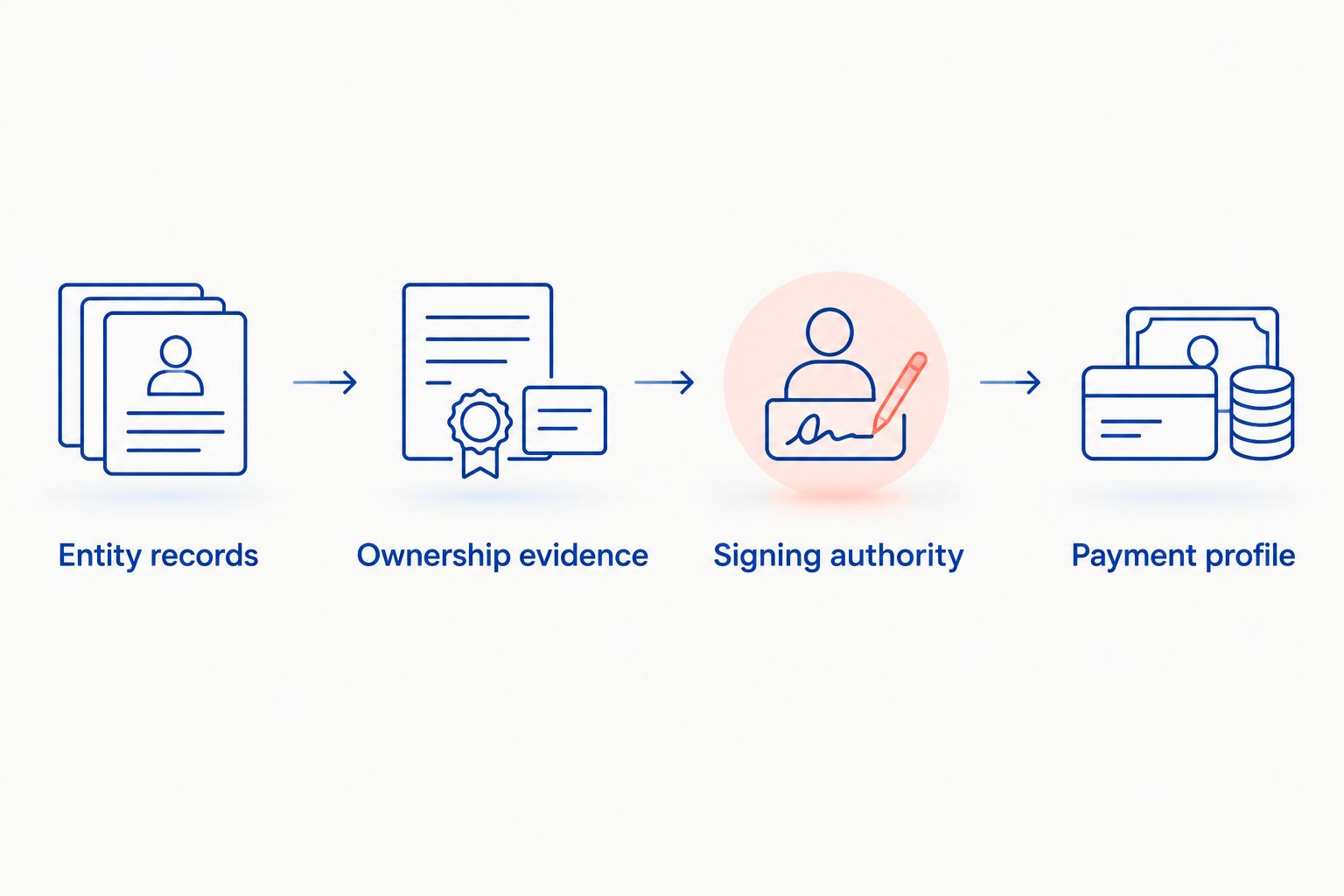
Prepare the banking application around your entity
For your 2026 application, distinguish the Saudi Central Bank’s bank-account rules from the chosen bank’s application requirements. The Saudi Central Bank, also known as SAMA, sets the regulatory framework; your bank assesses your application and specifies supporting evidence.
Entity records
Prepare the relevant incorporation and commercial-registration documents. Commercial registration records the business with the competent Saudi authority; it is not, by itself, confirmation that every proposed activity has the required approval.
Foreign-investor requirements also need separate attention. Confirm the applicable Ministry of Investment requirements for your structure and activity instead of treating investment registration, commercial registration and banking approval as the same step.
Ownership evidence
Be ready to explain the ownership chain and ultimate beneficial owners—the individuals who ultimately own or control the entity. A group chart helps organise the explanation, but the bank determines which supporting records it accepts.
Ensure names and entity details remain consistent across documents. Explain differences before submission rather than leaving the bank to reconcile conflicting records.
Signing authority
Identify who can open and operate the account. Align corporate resolutions, delegated authority and identity documents with the company’s governing documents and the bank’s requirements.
Separate payment preparation from approval where your organisation requires that control. Confirm how authority changes are recorded when directors or authorised employees leave.
Payment profile
Explain expected customers, suppliers, transaction purposes and relevant countries. Support the explanation with genuine commercial records where requested; do not create artificial transaction estimates to make the application appear more substantial.
Prepare this payment profile before requesting specialist accounts. The business purpose should explain the account choice, not follow it.
Keep banking aligned with ongoing compliance
Account opening is not the end of the compliance process. Banks conduct ongoing customer due diligence, which means reviewing customer information and transactions throughout the relationship.
Update the bank when relevant ownership, authorised signatories or business activities change. Retain supporting records for significant receipts and payments, and make sure someone is responsible for responding to information requests.
Gofico’s business setup and compliance support belongs alongside this work, not in place of the bank’s checks. Government requirements, bank requirements and advisory services are separate responsibilities; define who handles each before submission.
If you need setup support, contact Gofico with your proposed activity, ownership structure, entity status and expected payment currencies. Those details establish a clearer starting point than asking only which account is easiest to open.
Which corporate bank account should you choose?
Choose a Saudi-riyal corporate current account as the default for a Saudi operating entity. Add a foreign-currency account when recurring transactions justify it, and consider term deposits only for cash outside operating needs.
Treat escrow as a transaction-specific arrangement. Treat non-resident banking as a separate eligibility enquiry, never as evidence that your overseas company can conduct unrestricted business in Saudi Arabia.
FAQ
What’s the best bank account type for a foreign company in Saudi Arabia?
A Saudi-riyal corporate current account is the default starting point for a foreign-owned Saudi operating entity. Confirm that the bank accepts your structure and supports your required payment services.
Can a foreign company open a Saudi account without forming a local company?
Do not assume an overseas entity qualifies for a Saudi account without local formation. Ask the bank to confirm non-resident eligibility, required evidence and permitted transactions for the specific entity.
Is a foreign-currency account better than a Saudi-riyal account?
A foreign-currency account serves a different purpose from a Saudi-riyal operating account. It suits matching foreign-currency receipts and payments, while a riyal account addresses domestic operating needs.
Does opening a bank account give a foreign company permission to trade?
No, bank-account opening does not replace the registrations or activity-specific permissions required to conduct business. Confirm market-entry requirements separately from banking eligibility.
What documents should a foreign-owned company prepare for banking?
Prepare entity records, ownership evidence, signing-authority documents and an explanation of expected transactions. The bank specifies the exact documents and any certification or translation requirements.
Should a newly formed company put its capital in a term deposit?
Protect accessible operating cash before considering a term deposit. Review upcoming obligations and the deposit’s contractual access conditions before committing funds.
Does Gofico approve corporate bank accounts?
No, banks independently assess and approve corporate account applications. Gofico provides business setup and ongoing compliance support for foreign companies entering Saudi Arabia.
One last thing
A payment feature is not necessarily a separate account type. Payroll tools, international transfers and approval workflows belong on your service checklist even when the bank packages them alongside a current account. Ask the bank to demonstrate the workflow your finance team will actually use.
Related guides
- Banks for business account opening in Saudi Arabia
- Business structures for foreign investors in Saudi Arabia
- Compliance obligations for foreign companies in Saudi Arabia